Saturday, July 25, 2015

Words Poetry and Emotions 1


देखा जो तीर खाके कमींगाह की तरफ
अपने ही दोस्तों से मुलाक़ात हो गई

कमींगाह - घात लगाने की जगह 

रात यूं दिल में तेरी खोयी हुई याद आई,
जैसे वीराने में चुपके से बहार आ जाए,
जैसे सहराओं में हलके से चले बादे नसीम,
जैसे बीमार को बेवजह करार आ जाए...

इक्का दुक्का सदाए जंजीर,
ज़िंदा में रात हो गयी है

ज़िन्दा - कैदखाना 

दयार ए शाम नहीं, मंजिले सहर भी नहीं,
अजव नगर है यहाँ न दिन चले न रात चले...

कभी तो रात को तुम रात कह दो,
ये काम इतना भी अब मुश्किल नहीं है,

सियाह रात नहीं लेती नाम ढलने का,
यही तो वक्त है सूरज तेरे निकलने का ...

जाय है जी निजात के गम में,
ऐसी जन्नत गयी जहन्नम में...

हमको मालूम है जन्नत की हकीकत लेकिन,
दिल के खुश रखने को ग़ालिब ये ख़याल अच्छा है..

रात दिन गर्दिश में है सात आसमां,
हो रहेगा कुछ न कुछ घबराएँ क्या...


Friday, July 24, 2015

Positive News -‘Missing’ Mewat boy returns home after 15 years

NEW DELHI: Hazrat Nizamuddin station may be witnessing numerous teary-eyed reunions every day but the atmosphere here was different on Friday. There was hope, faith and the end of a long wait. A group of men in their early twenties huddled around a tea stall at the platform waiting to welcome their brother, Zahid Hussain, they lost 15 years ago. 

There was a loud cheer as soon as Zahid (22), along with his wife and two children, alighted from the train. Other passengers stopped to look at the celebrations as his brothers gave him a warm hug. Zahid was seven years old when he left his home in the Mewat district of Haryana to study in a madrassa in Saharanpur. His father, Akbar Hussain, was a driver who collected Rs 5,000 to pay for Zahid's fee and clothes. The family gave him a hearty farewell before he left, little did they know that Zahid would never return home. 

Zahid's younger brother, Sajid, recalls the day their family got to know about his absence from the madrassa. "Our uncle had sent him some money but the madrassa returned it. When we contacted them they told us the last time they saw Zahid when he was collecting money with his friend and both the boys went missing from the next day," he said. 

Zahid and his friend reached Bangalore by train. His friend abandoned him near a mosque a few hours later. Intimidated by the new atmosphere, Zahid took refuge inside the mosque. He met a man there who got him employed at a tea stall. 

"As the years passed we started giving up hope to see him again. We took the help of police but even they could not trace him," says Sajid. 

After working at the tea stall for a few years Zahid was taken home by a man who raised him as his own son. "He changed my last name from Hussain to Pasha, after his name. All my identity cards and official papers carry my new name. He helped me find work with a cable service provider and got me married," said Zahid. 

His homecoming was no less than a movie script. About 1,200 miles away from Karnataka, Sunil Jaglan, the sarpanch of Bibipur village in Haryana and the founder of "selfie with daughter" campaign, received a call from Zahid. He claimed he knew the whereabouts of a seven-year-old boy from Haryana who had gone missing. 

"After receiving the call I told him that I am part of Operation Muskaan that helps reuniting missing children with their families. It was only then that he revealed he was boy who got lost 15 years ago," said Jaglan. Jaglan then contacted the sarpanch of all the villages in Haryana, enquired about Zahid's family and was successful in tracking them down. 

It has been a week since Eid but back in his village the festivities begin with his arrival. Relatives from all over came home to welcome him. 

"My mother is very happy. She says it feels as if Zahid is born again today. Her condition started deteriorating when he got lost. She stopped eating and began ageing faster. I have seen her smile after a very long time" said Sajid.

Positive News - navy flies harvested heart for Kochi auto driver

THIRUVANANTHAPURAM: The Indian Navy on Friday carried out a rare rescue attempt by lending a Dornier to ferry a heart from Thiruvananthapuram to Kochi, an operation that not only saved an auto driver's life but became the first time in India that a defence aircraft was used as air ambulance in a civilian medical emergency. 

On Friday morning, 46-year-old Neelakanda Sharma was declared brain-dead at Thiruvananthapuram's Sree Chitra Tirunal Institute of Medical Sciences and his family agreed to donate his heart. Mathew Achadan, a 47-year-old auto driver, suffering from dilated cardiomyopathy, was to be the recipient at Kochi's Lissie Hospital. 

But transferring the heart from Thiruvananthapuram to Kochi, even with a green corridor, in less than the four-hour deadline imposed by doctors was going to be impossible. 

By 6.10pm, a group of doctors at Sree Chitra Tirunal Institute had harvested Sharma's heart after a five-hour operation that had its share of anxious moments. Then began the most dangerous part.

In a clinical operation that saw the police, hospital authorities and the Indian Navy work seamlessly, the heart was taken to the IAF base in the state capital in 18 minutes. The Dornier carrying the heart took off at 6.48pm and reached Kochi's naval base at 7.29pm. 

The ambulance left the Kochi naval air station at 7.34pm and, due to spotless traffic coordination involving around 200 policemen, it reached Lissie Hospital 10km away in eight minutes and 32 seconds. The transplant operation began at 8pm. 

It all started with a phone call by the Ernakulam district collector to the Navy PRO on Friday morning. The collector sought a navy chopper but the navy authorities, after consultations with higher-ups, did one better. They said they were ready to provide an aircraft since a chopper would take close to 90 minutes for the flight between the two cities whereas a Dornier could do it in just 35 minutes. 

"The ischemic timing of a heart is four to five hours and a heart that has been removed should start beating in a new destination within that period or else we may not get the desired result. Luckily we were able to finish the removal in Thiruvananthapuram by 6.10pm and start transplanting by 8pm," said Dr Joe Joseph, cardiologist at Lisie Heart Institute, who is part of the transplant team. 

The heart transplant on Mathew was done by a team of four doctors headed by Dr Jose Chacko Periyappuram.

Positive News Today- Indian Tiger Woods in the making

NEW DELHI: An Indian tiger cub is prowling the golf courses in the USA. And he is hunting trophies by the week. 


Prodigy Shubham Jaglan, the 10-year-old son of a milkman from hinterland Haryana, swung his way to the IJGA World Stars of Junior Golf crown in Las Vegas, winning by a handsome five-stroke margin. Last week, he had clinched the IMG Academy junior world championship for the 9-10 age category in San Diego.

"It's a dream come true. My year's hard work has given me all these titles," he told a TV channel.

The young master already has the next tournament at Pinehurst in his sights. Winning at Pinehurst would make it a junior grand slam of sorts for him. "That will be a huge achievement for me," said Shubham.

Coached since the age of seven by India's former top golfer Nonita Lall Qureshi, Shubham comes from Israna, a village in Haryana's Panipat district.

Supported by the Golf Foundation, a charitable society formed by golfers such as Amit Luthra to help talented, underprivileged golfers, he now lives with his family in Ashram, a south Delhi colony.

Before being spotted by Nonita, the young golfer trained at an abandoned agriculture field and practised his bunker shots from a concrete mixer filled with sand. He learnt most of his early golf watching pros on YouTube.

Shubham, who featured in Aamir Khan's Satyamev Jayate last year, has won over 100 tournaments so far. And this is just the beginning.


Times View

The case of Shubham Jaglan is an excellent illustration of how much sporting talent there is in a country of India's size - if only spotted and nurtured. Shubham's feats prove that given the right opportunities and access to sporting facilities, such talent can reach global levels. Unfortunately, access to sporting facilities is so constrained and a culture of sports so lacking that despite a population of over a billion, the country produces hardly any world-class sportspersons. Governments need to invest and create the infrastructure so that every child can participate in sports. Corporates too can do their bit to ensure Indian sports takes its rightful place on the global stage.

Sunday, April 7, 2013

Mode of Transport used in Different Places

1
bullock cart or ox cart is a two-wheeled or four-wheeled vehicle pulled by oxenIt is a means of transportation used since ancient times in many parts of the world. They are still used today where modern vehicles are too expensive or the infrastructure does not favor them.


In India Bullock Carts are commonly used in the rural parts of the country, where it is used for transporting goods and carriages and also people. The traditional ox cart is the National Symbol of Work in the Costa Rica. 


2

tonga is a light horse-drawn carriage used for transportation in IndiaPakistan, and Bangladesh.Tangas are a popular mode of transportation because they are fun to ride in, and are usually cheaper to hire than a taxi or rickshaw. However, in many cities, tangas are not allowed to use highways because of their slow pace. 

Tangas have become a traditional feature of weddings and other social functions in Pakistan, as well as in other nations. They are usually pulled by two horses, though some require only one. Tangas are used for economic activity, mainly to carry heavy goods within the city limits

3


Like Bullock carts in the village, auto rickshaws are cheap and efficient transportation used in Indian cities. Modern auto rickshaws run on CNG and are environmentally friendly. CNG autos are distinguishable from the earlier petrol-powered autos by a green and yellow livery as opposed to the earlier black and yellow. Certain local governments are pushing for four-stroke engines instead of the current two-stroke versions. 

Other Public transportation used in cities are Bus, Metro, taxis etc, while for travelling in between cities there are trains and air services available. People in cites use their private transports too like car, jeep, van, two wheeler scooter, bikes etc while in villages bullock and tango carts have been replaced by these private transport means though farmers still use tractors as a mode of transport in small village places. 


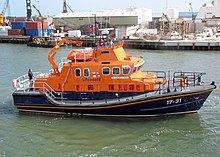
boat is a watercraft of any size designed to float, to provide passage across water. Usually this water will be inland (lakes) or in protected coastal areas. Boats have served as short-distancetransportation since early times. he Uru wooden big boat was made in Beypore a village in south CalicutKerala, in southwestern India. These have been used by the Arabs and Greeks since ancient times as trading vessels. This mammoth wooden ship was constructed using teak, without any iron or blueprints and which has transportation capacity of 400 tonnes. 

India has about 14,500 km of navigable waterways, which consists of the Ganges–Bhagirathi–Hooghly rivers, the Brahmaputra, the Barak river, the rivers in Goa, the backwaters in Kerala, inland waters in Mumbai and the deltaic regions of the Godavari - Krishna rivers. About 44 million tones of cargo is moved annually through these waterways using mechanized vessels and country boats In India.

5.


helicopter or chopperhelo is a type of rotorcraft in which lift and thrustare supplied by rotors. This allows the helicopter to take off and land vertically, to hover, and to fly forwards, and backwards.  These attributes allow helicopters to be used in congested or isolated areas where fixed-wing aircraft would usually not be able to take off or land. it is generally used as a private air transport mode. 

Apart from all the transport system mention above, some of the transport mode used in some special places, like in the desert areas of Rajasthan and  Gujarat Camel carts are commonly used, In Kolkatta Trams are the life line of the city public transport system. In hill areas Air Trams are used to go pass the hills.Transport modes are discovered according to the need of a certain place to make life simpler, as we all know necessity is the mother of invention.